
Blue carbon
ecosystems
Blue carbon ecosystems have the capacity to capture and sequester atmospheric carbon in marine sediments. These include seagrass beds, mangroves and salt marshes.
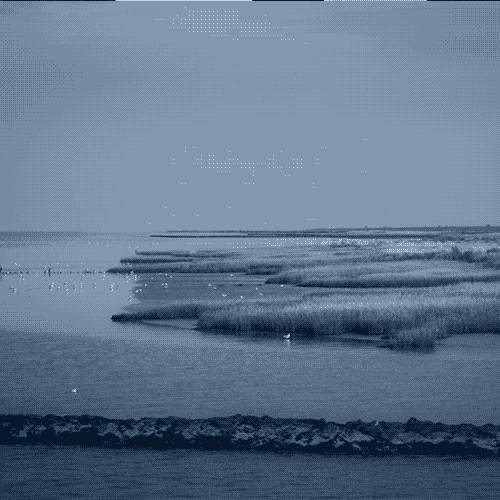
The term blue carbon refers to the ability of ocean ecosystems to capture and sequester atmospheric carbon (carbon dissolved in the air, mainly in the form of CO2, which acts as a greenhouse gas and causes climate change) in marine sediments.
The current scientific consensus agrees on three blue carbon ecosystems: mangroves, seagrass beds and salt marshes.
These are nature-based solutions that are particularly important in mitigating and adapting to climate change.
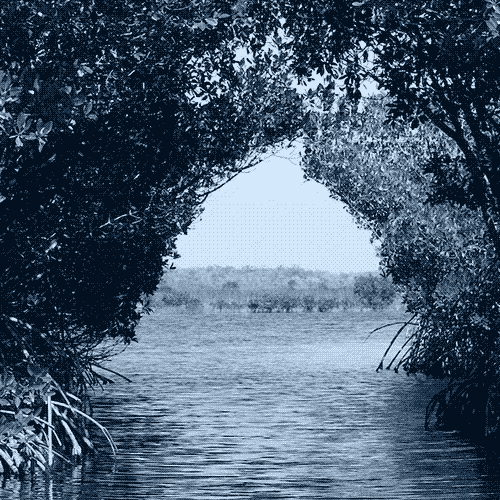
Mangroves
These are areas of vegetation that grow on coastal strips subject to tidal influence.
This vegetation consists of trees and shrubs known as mangroves. They are found throughout the intertropical zone.
Salt marshes
Salt marshes are ecosystems located in the upper part of the intertidal zone (the part of the coastline between the highest and lowest tide marks). They consist of dense vegetation made up of plants and sometimes small halotolerant shrubs (plants that can withstand salt).
The species present include glasswort, cordgrass, sea purslane, etc.
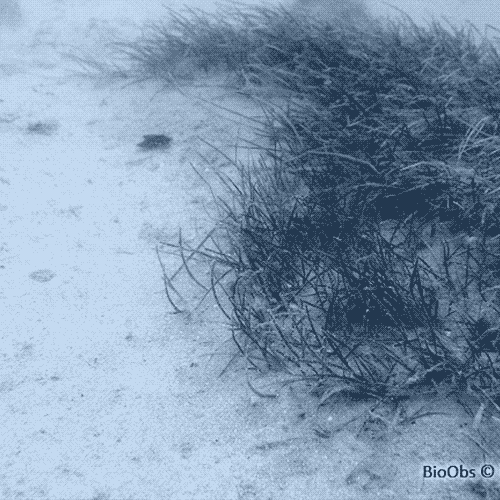
Seagrass beds
Seagrass beds are underwater meadows. They are flowering plants (with a root system) and not algae!
Seagrass beds are found at various depths on the seabed. Some are always submerged, while others are in the intertidal zone (sometimes submerged, sometimes exposed depending on the tides).
Photo : @Patrice Petit
Distribution of blue carbon ecosystems
around the world
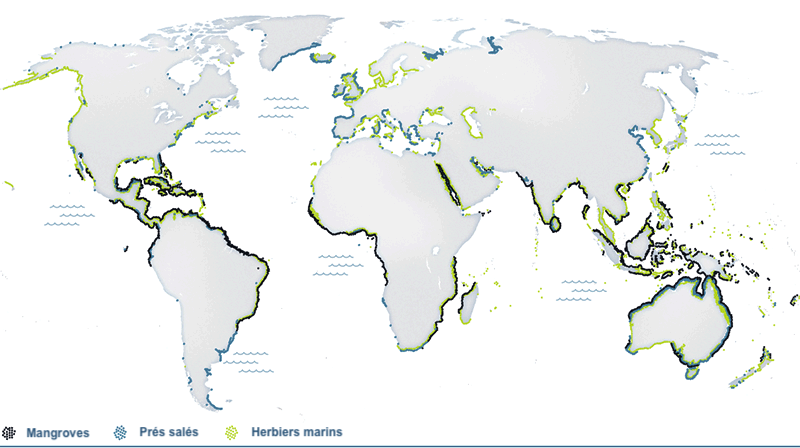
Source : Blue Carbon Initiative
The concept was introduced in 2009 based on the observation that 55% of the carbon produced by photosynthesis (known as ‘green carbon’) was due to marine organisms. In order to raise awareness of the importance of these ocean carbon sinks, they were named blue carbon ecosystems.
These three ecosystems are unique in that they are among the most productive ecosystems on the planet and among the most efficient carbon sinks. They sequester 20 to 40 times more carbon per unit area than forests. The efficiency of this sequestration allows for the creation of very large carbon stocks in these ecosystems.
Thus, although they cover only 0.2% of the ocean’s surface, they are responsible for at least 50% of the organic carbon trapped in marine sediments.
Threatened ecosystems
Unfortunately, these ecosystems are under serious threat from human activity and the consequences of climate change.
Since the beginning of the industrial era (1850), 50% of the total area of these ecosystems has been destroyed.
Each year, nearly 2% of the remaining salt marshes, 1.5% of seagrass beds and less than 0.4% of mangroves are lost.
In order to mitigate climate change, it is therefore essential to reverse this trend.
To do so, it is necessary to protect these ecosystems as much as possible and restore them where possible.
If protection and restoration programmes are optimally implemented in these ecosystems, the additional mitigation potential would be 3% of global greenhouse gas emissions.
Of course, this figure is an optimistic estimate, and blue carbon ecosystems alone will not solve the climate crisis.
It is important to bear in mind that the most effective action in the fight against climate change is indeed reducing greenhouse gas emissions through energy transition and energy efficiency.
Nature-based solutions for climate change adaptation
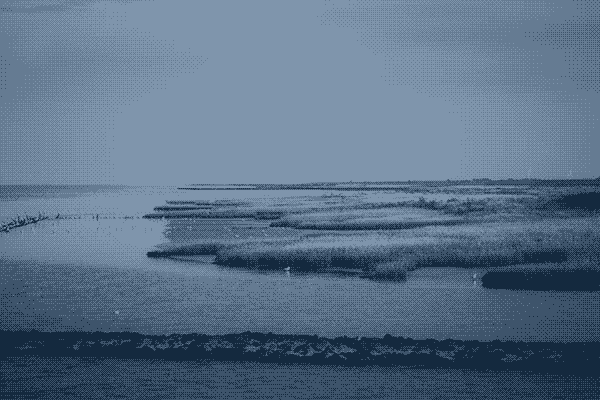
These ecosystems are not only extremely efficient carbon sinks, they perform many other ecological functions that make them extremely important nature-based solutions for human societies, particularly for climate change adaptation.
The ecosystem services provided by these ecosystems are numerous:
- Protection against storm surges
- Protection against erosion
- Reservoir of biodiversity (and therefore fishery resources)
- Water purification
- Heritage value (tourism, recreational activities, etc.)
- Climate regulation
All of these ecosystem services must be taken into account in projects to protect and restore blue carbon ecosystems.
In their 2022 study, Williamson and Gattuso (researchers at the University of East Anglia (UEA), the French National Centre for Scientific Research (CNRS) and the OACIS initiative) clearly show that the significant costs and uncertainties that can be associated with blue carbon ecosystem restoration projects are only offset with certainty by taking this set of co-benefits into account.
Surfrider actions
Surfrider is committed to protecting and restoring blue carbon ecosystems at the European level.
To this end, we participate in the development of scientific knowledge.
We conduct studies on carbon stocks in the sediments of the seagrass beds in Txingudi Bay and participate in conferences and meetings between scientists working on this topic.
In particular, we participate in the COPIL (steering committee) for the NATURA 2000 area of Txingudi Bay and the Zostera Commission of the Arcachon Bay Marine Nature Park to support the protection of these ecosystems.
We also participate in awareness-raising activities and scientific mediation with the general public and local authorities through participation in stands, public speeches, interviews and podcasts.
For example, a workshop on blue carbon ecosystems was organised in partnership with the city of La Rochelle during the 2024 edition of the Carrefour des gestions locales de l’Eau (the largest forum for water stakeholders in France, welcoming more than 14,000 participants).