
With nearly 70,000 kilometers of coastline and 40% of its population living near the coast, Europe maintains a special relationship with the Ocean. The European Union now has the world’s largest collective maritime zone, and ocean-related activities generate 250 billion euros in economic wealth.
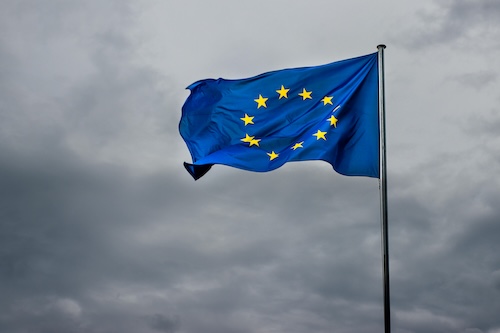
In response to these considerable challenges, the EU presented a highly anticipated initiative for marine protection stakeholders at the 2025 United Nations Ocean Summit last June: the European Ocean Pact.
A Unified Framework to Protect the Ocean
The European Ocean Pact responds to a strong demand from environmental organizations specializing in marine protection.
Its objective? To bring together all European policies related to the Ocean to create a coherent overall vision and avoid fragmented efforts.
Rather than multiplying isolated initiatives, the European Commission aims to establish a comprehensive ocean management strategy. To achieve this, it consulted more than 140 organizations, which then contributed to defining necessary measures through their Blue Manifesto, a reference document proposing concrete actions.
The Pact’s structure also includes the creation of an Ocean Council, bringing together all stakeholders, including NGOs. A dashboard will track progress made. The stated ambitions are substantial: halving plastic and nutrient pollution, and restoring one-fifth of European marine ecosystems before 2030.
To ensure implementation of these commitments, specific Ocean legislation will complement the framework by 2027.
Six Priority Areas of Intervention
The Pact is structured around six complementary areas of action, designed to address the major challenges facing our oceans.
Preserve and Regenerate Marine Health
Human pressures on marine ecosystems are multiplying, threatening biodiversity and coastal populations. To reverse this trend, the Pact plans to revise the Maritime Spatial Planning Directive, the tool that organizes various activities at sea. Member States will be encouraged to develop marine protected areas and create blue carbon reserves, these coastal ecosystems with multiple benefits.
Develop a Competitive and Responsible Blue Economy
Fishing, aquaculture, maritime transport, coastal tourism, marine energy: the ocean supports many essential economic sectors. But one fact is clear: these activities can only thrive sustainably if the ocean remains healthy. It is impossible to imagine viable fishing without fish stocks, or sustainable coastal tourism without impeccable water quality.
The Pact therefore proposes to reassess the Common Fisheries Policy, define a long-term vision for fishing and aquaculture by 2040, and launch a strategy for sustainable tourism, emphasizing emission reduction and innovation.
Support Maritime Territories
Coastal and island communities and outermost regions constitute the pillars of a sustainable blue economy. They supply Europe with quality seafood products and marine renewable energy. Their future deserves special attention: the Pact plans to develop a new strategy for European islands, update the approach for outermost regions, and create a dedicated strategy for coastal community development.
Advance Ocean Knowledge
Europe, a world leader in ocean sciences, intends to improve our understanding of the Ocean and make this knowledge accessible to all. This ambition translates into several initiatives: launching an ocean observation program, creating a European digital twin of the ocean by 2030 (a complete digital modeling of the European Ocean, powered by AI and designed to simulate and explore “What if?” scenarios revealing the potential impacts of our decisions on the marine environment), and establishing a European network of young ambassadors to raise awareness of ocean issues.
Strengthen Maritime Security
Faced with the growing complexity of threats at sea, enhanced coordination is essential. The Pact notably includes a comprehensive strategy to eliminate unexploded ordnance from European waters, increased cooperation with like-minded Arctic states, development of a European drone fleet for maritime surveillance, and strengthened partnerships with North Africa and the Middle East.
Amplify European Ocean Diplomacy
The EU aims to strengthen its international influence to protect the oceans and promote multilateral cooperation. Among the planned actions: a renewed strategic approach to international fishing agreements, intensified fight against illegal fishing through digitization of the certification system, support for the high seas biodiversity agreement with a 40 million euro contribution, negotiations to create three vast marine protected areas in the Southern Ocean, and advancement of an ambitious treaty against plastic pollution.
Why the Ocean Deserves Our Attention
The ocean plays a fundamental role in our planet’s balance. Through ocean currents, it redistributes solar energy from the equator to the poles and has absorbed approximately 90% of the excess heat caused by greenhouse gas emissions, thus slowing atmospheric warming.
Its carbon storage capacity far exceeds that of the atmosphere and terrestrial ecosystems: approximately thirteen times more. Since the 1980s, it has captured between one-fifth and one-third of human CO₂ emissions, particularly thanks to phytoplankton and coastal ecosystems such as mangroves and seagrass beds.
A true blue lung of the planet, the ocean also produces a considerable portion of the oxygen we breathe.
But this climate regulator is now reaching its limits.
Excess CO₂ is causing ocean acidification that threatens marine ecosystems and reduces carbon absorption efficiency. Record temperatures observed down to 2,000 meters deep are causing polar ice to melt, sea levels to rise, and marine heat waves twice as frequent as before.
Protecting the Ocean therefore becomes imperative: preserving its vital ecosystems, reducing human pressures, and responsibly developing marine renewable energy.
Environmental Organizations' Critical View of the European Ocean Pact
Marine protection NGOs welcome certain aspects of the Pact, particularly the commitment to strengthen coherence and implementation of the Nature Directives and the Restoration Law, application of the precautionary principle to destructive activities such as deep-sea mining and geoengineering, and the desire to conclude an international agreement to regulate subsidies that encourage overfishing.
Concerning Gaps
Despite these positive points, environmental organizations identify significant weaknesses.
While the Pact recognizes the importance of protecting the oceans, it struggles to translate this ambition into concrete actions. The text mentions implementation of existing legislation, but without proposing a specific action plan or binding timeline.
The omission of the 2023 Marine Action Plan, which proposed operational measures to align fishing and marine protection, also raises concerns. Similarly, the fishing sector has no framework to strengthen its resilience to climate change and ecological collapse.
Environmental organizations point to five other major gaps that must be filled for the future Ocean law to be truly effective:
- The absence of a strategy for the gradual elimination of bottom trawling in marine protected areas
- The lack of a roadmap ensuring implementation of Common Fisheries Policy objectives, with sufficient funding for their application
- Insufficient public financial commitments for marine conservation and support for low-impact artisanal fishing, enabling a just transition
- The absence of a plan to reduce pollution at the source, whether plastics, nutrients, or contaminating chemicals
- The lack of a clear vision toward a regenerative blue economy
To transform these intentions into tangible results, future legislation must integrate legally binding objectives and rigorous monitoring mechanisms, the only means of guaranteeing the protection and restoration our oceans need.
The European Ocean Pact marks an important milestone in European recognition of ocean issues. It offers a coherent overall framework and sets significant ambitions. However, a gap persists between stated intentions and their realization. Clear objectives, binding measures, and appropriate funding are essential to truly protect marine ecosystems and ensure sustainable ocean governance. The Ocean shapes our economies, our food systems, and even the air we breathe. It deserves better than promises…