
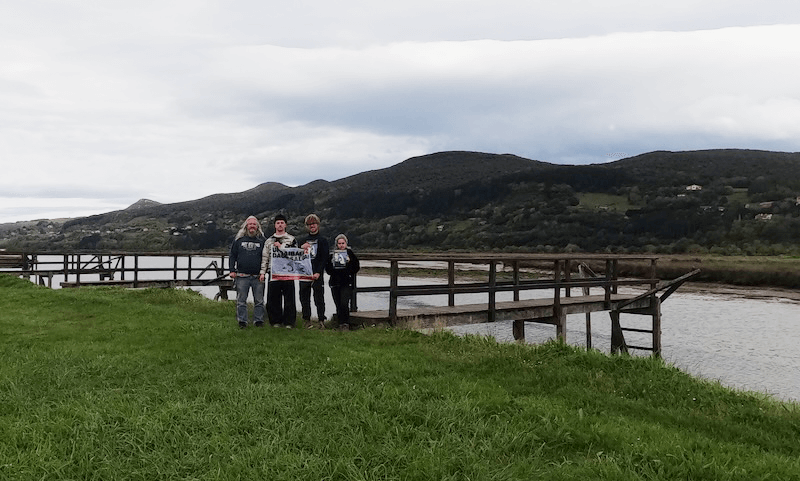
In northern Spain, in the province of Bizkaia, lies an exceptional nature reserve: the Urdaibai Reserve.
Created in 1984 by UNESCO and listed in the Natura 2000 network and the Ramsar Convention, this area is the only biosphere reserve in the autonomous community of the Basque Country. Its ecological heart is the Oka River estuary, a unique collection of coastal ecosystems: sea cliffs, salt marshes, sea grass beds, oak forests and wetlands.
This site, of inestimable ecological value, is now threatened by a major urban development project: the extension of the Guggenheim Museum.
A crucial area for the climate, biodiversity and local communities
The salt marshes and eelgrass beds of the Urdaibai estuary are blue carbon ecosystems of high ecological value. They store carbon, mitigate the effects of erosion, protect against flooding, filter water, and provide a crucial habitat for many species, including migratory wading birds. Among the most emblematic are the Eurasian spoonbill (*Platalea leucorodia*), the bittern (*Botaurus stellaris*), the osprey (*Pandion haliaetus*) and the European mink (*Mustela lutreola*), a small carnivorous mammal that is critically endangered.
The estuary is also home to the largest area of sea grass beds in the Basque Country: 19.8 hectares of *Nanazostera* (dwarf eelgrass) were recorded in 2012. As for the salt marshes, they are home to a wide variety of vegetation typical of wetlands, including sea rushes, sea grass and red salicornia.
But beyond these scientific aspects, Urdaibai is a place where local communities can reconnect with nature. Surfing, bird watching and walks in the marshes are just some of the activities that contribute to the well-being of the inhabitants and the promotion of a shared natural heritage.
A cultural project with serious consequences
Since 2008, plans to extend the Guggenheim Museum in Bilbao into the reserve have regularly resurfaced. The plans involve the construction of two buildings five kilometres apart, connected by a footbridge on stilts crossing the protected area.
– The first site, in Gernika, would be located on the site of a former industrial factory.
– The second would be built on the grounds of the Astilleros de Murueta shipyard, in the middle of a wetland area where past dredging has already caused significant ecological disruption.
Although this ‘major project’ has not yet been made official, measures have already been taken to ensure that it can go ahead, such as an exceptional reduction in the coastal protection easement from 100 metres to just 20 metres. This decision is currently being challenged in court by several NGOs, including Greenpeace.
The expected 144,000 visitors per year, concentrated between June and September, also risks exacerbating the already high tourist pressure in this area. This overcrowding threatens the ecological balance of Urdaibai and its natural resources, such as its water supply.
Growing mobilisation of civil society
Faced with this threat, local mobilisation is intensifying. Since the creation of the Guggenheim Urdaibai Stop platform in February 2023, several demonstrations have brought together thousands of people, notably in Gernika in October 2023 and October 2024.
Major Spanish environmental organisations such as SEO/BirdLife, Greenpeace, WWF, Ecologistas en Acción and Amigos de la Tierra have taken a stand in favour of abandoning the project altogether.
Why Surfrider opposes the project
Resolutely committed to the preservation and restoration of marine and coastal ecosystems across Europe, Surfrider Foundation joins the associations that have already taken a stand and strongly opposes this project, which directly threatens blue carbon ecosystems. It jeopardises a natural, cultural and social heritage that is essential to the fight against climate change, the preservation of biodiversity and the daily connection between people and nature.
We believe that the announced public investments should be redirected towards the ecological restoration of the reserve, not its transformation.
Urdaibai is not for sale. Let’s preserve it.