
COP30: a crucial meeting, 10 years after the Paris Agreement
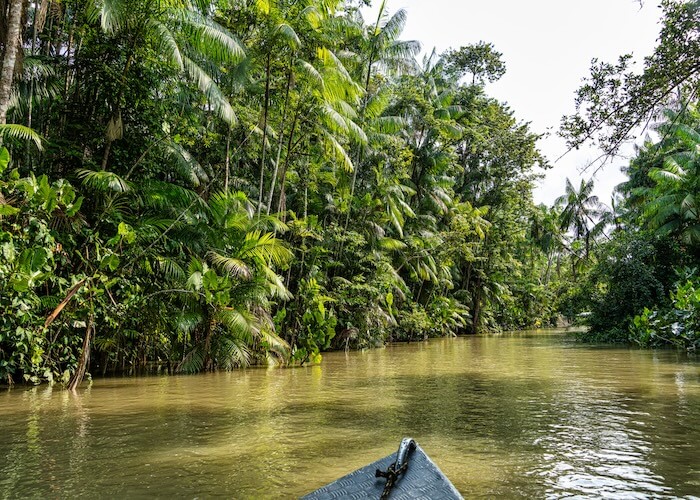
For the past two days (since 10/11/2025), the world has had its eyes fixed on Belém, in the heart of the Brazilian Amazon. The choice of this city is no coincidence: located in the middle of the Amazon rainforest, it embodies the challenges that COP30 will have to address.
This climate conference promises to be decisive, especially as it comes ten years after the adoption of the Paris Agreement. It is therefore the ideal time to take stock without complacency, assess our ability to address current and future climate challenges, and address the crucial issues of social justice, bioeconomy and protection of Amazonian ecosystems.
But behind these themes lies a much more urgent question: are we capable of transforming our economic and energy models to limit global warming to 1.5°C?
This is the whole purpose of this COP, which also marks the renewal of all countries’ climate plans. Ahead of this event, each country had to submit new commitments to reduce greenhouse gas emissions by 2030 – nationally determined contributions (NDCs) that have been a long time coming.
At the heart of the negotiations at this new COP is a fundamental concept: climate justice and the issue of financing. Northern countries must assume their historical responsibilities and finance the transition and adaptation of developing countries. These nations, which are responsible for less than 5% of historical emissions, are bearing the brunt of the consequences of climate change. However, the $300 billion in public funding promised in 2024 is still not on the table – and in any case remains largely insufficient to meet actual needs.
This financial issue will be addressed alongside two other major challenges at COP30. On the one hand, strengthening the links between climate, biodiversity and the fight against deforestation – three inseparable battles for the preservation of our planet. On the other hand, achieving a just and equitable transition away from fossil fuels, which involves supporting Southern countries in this transition while ensuring respect for human rights, the consent of local populations and the reduction of inequalities.
Understanding COPs: origins, functioning and scope
To fully grasp the importance of this meeting in Belém, we must go back to the very foundations of the COPs. Their history began in 1992, at the Earth Summit in Rio. Faced with repeated warnings from the scientific community about the seriousness of global warming, UN member states decided to create the United Nations Framework Convention on Climate Change (UNFCCC). The goal was to finally take global action against a threat that knows no borders.
It was within this framework that the COPs – the Conferences of the Parties – were born, a form of organisation specific to certain international conventions on climate change. Since 1995, these conferences have been held annually under the auspices of the UN, with a clear mission: to bring states together to set common environmental goals and adopt texts that guide global climate action. In short, to establish shared standards and objectives in the face of the climate emergency.
There are actually three separate COPs: one on biodiversity, one on combating desertification, and – most importantly – one on climate change. The latter has taken on particular significance since 2016, with the entry into force of the Paris Agreement. Since then, the meeting of the Parties to the Paris Agreement (CMA – Conference of the Parties serving as the meeting of the Parties to the Paris Agreement) has been convened jointly with the COP and CMP. This is why the event in Belém is known as COP30/CMP20/CMA7.
Ahead of each COP, a pre-COP brings together the environment or energy ministers of some 50 countries, including representatives of the main negotiating groups. This informal meeting serves to prepare the ground, identify sticking points and set out guidelines for the official negotiations involving 198 states (197 parties and the European Union).
In addition to the states at the heart of the negotiations, COPs also welcome a multitude of non-state actors: NGOs, young people, businesses, trade unions, indigenous peoples, scientists, etc. This diversity is essential to enriching the debates. Since 1998, the IPCC has even contributed its scientific expertise as an advisory body, ensuring that decisions are based on the best available knowledge. Observers can attend the discussions (when authorised by the states) and sometimes speak, thus playing a monitoring and countervailing role.
It is crucial to understand that COPs are not isolated events, detached from the rest of the year. They are part of an ongoing international dynamic, punctuated by scientific reports, interim negotiations and citizen mobilisation. They certainly do not solve everything at once – and it would be naive to hope that they would – but they remain key moments for advancing collective climate action and maintaining pressure on decision-makers.
The Paris Agreement: the legal framework for climate action
It is impossible to talk about COPs without mentioning the Paris Agreement, adopted at COP21 in 2015 and ratified to date by 194 Parties (193 States and the European Union). This agreement represents a historic milestone: it is the first legally binding framework for action against climate change on a global scale. For Surfrider and all defenders of the ocean, a real ‘step forward’ was taken when the word ‘ocean’ was included in the preamble, finally recognising the central role of marine ecosystems in climate regulation.
The Paris Agreement is based on four complementary components. The first establishes a universal framework of rules and mechanisms aimed at keeping global warming below 2°C, and if possible 1.5°C, compared to pre-industrial levels. This ambition cannot be achieved without the second component: nationally determined contributions (NDCs). Ahead of COP21, each country had to publish a contribution outlining its efforts to reduce greenhouse gas emissions, with the obligation to revise these commitments upwards every five years – hence the crucial importance of COP30 this year.
The third component, finance, aims to support developing countries and finance the transition to low-carbon, resilient economies. As we have seen, this is a particularly sensitive issue that has not yet been adequately addressed. Finally, the fourth component strengthens the commitments of civil society and non-state actors (cities, regions, businesses, associations, etc.) through the multi-stakeholder initiatives of the Action Agenda. This is because the fight against climate change cannot rely solely on states: it must mobilise society as a whole.
Our hopes for COP30
The indispensable role of civil society
Civil society plays such a central role in COPs because it fulfils two essential functions. On the one hand, it alerts public opinion to international climate issues, translating often technical negotiations into messages that are accessible to the widest possible audience. On the other hand, it exercises constant vigilance over the good and bad practices of states and companies, preventing fine promises from remaining unfulfilled. However, despite this indispensable role, civil society participation in COPs remains complicated, with limited access to negotiating rooms and often insufficient resources.
Surfrider's hopes for COP30
Ten years after the Paris Agreement, COP30 is generating even higher expectations as it comes at a pivotal moment!
Firstly, it seems that, more than ever, the focus must be on the absolute priority: moving away from fossil fuels, particularly offshore oil and gas exploitation. This transition must be accompanied by a shift towards sobriety – energy sobriety, certainly, but not only that: our entire consumption and production model must be rethought.
Echoing this, we hope that at the end of COP30, the Just Transition will be defined as a true pillar of climate ambition: discussions related to the transition must be based on rights, inclusion and equity between countries, but also take into account that we are not all equal in the face of the climate challenge.
We also hope that nature-based solutions (NBS) will be integrated into the revision of NDCs, in line with the Blue NDC Challenge launched by France and Brazil at the UNOC. As every year, the Ocean and Climate Platform (POC) will publish a report on this crucial topic. The stakes are high: adaptation will be at the heart of the discussions, as concrete indicators need to be defined so that States can implement adaptation measures on their territory. By protecting and restoring natural ecosystems, NBS are a major lever for strengthening resilience to climate impacts.
Another burning issue that can no longer be ignored is the financing of adaptation. Last year’s failure in Baku must not be repeated. This is not a secondary issue that can be put off until later, but a matter of survival for millions of people in the most vulnerable countries.
Beyond these specific points, we call for a more integrated approach to environmental challenges. It is time to forge stronger links between the various COPs (climate, biodiversity, BBNJ) and potentially with the plastics treaty. This convergence is an ecological necessity: global plastic production accounts for 5% of greenhouse gas emissions, and this production could triple by 2050. By bringing these issues together, we would kill two birds with one stone, tackling plastic pollution and GHG emissions simultaneously.
Finally, for the future of the COPs, one area needs to be addressed: regulating the participation of lobbyists. Too often, the interests of the fossil fuel industry and other unscrupulous economic actors weigh heavily on negotiations, diluting climate ambition. Stricter regulation of their presence would allow for healthier debates and more courageous decisions.
It is time to take action
COP30 is being held at a critical moment: with five years to go until the 2030 deadline, it is more urgent than ever to change the global climate trajectory. Scientific reports are coming thick and fast, each more alarming than the last, and the window of opportunity to keep global warming below 1.5°C is rapidly closing. We can no longer afford to wait or take half-measures.
In this tense context, punctuated by geopolitical tensions and significant democratic setbacks in some countries, we must remain mobilised. Citizens, NGOs, responsible businesses, scientists: we all have a role to play in keeping pressure on decision-makers. Without this collective vigilance and constant pressure, governments may be tempted to relax their efforts or give in to short-termism.
COP30 is not an end in itself, but a step on a long road. Its success will be measured not by the fine words spoken in Belém, but by the concrete actions that follow in the months and years to come. It is up to us to remain vigilant and mobilised so that promises are finally turned into reality.